
Which Grass Types Would Be Best For Knoxville Lawns?
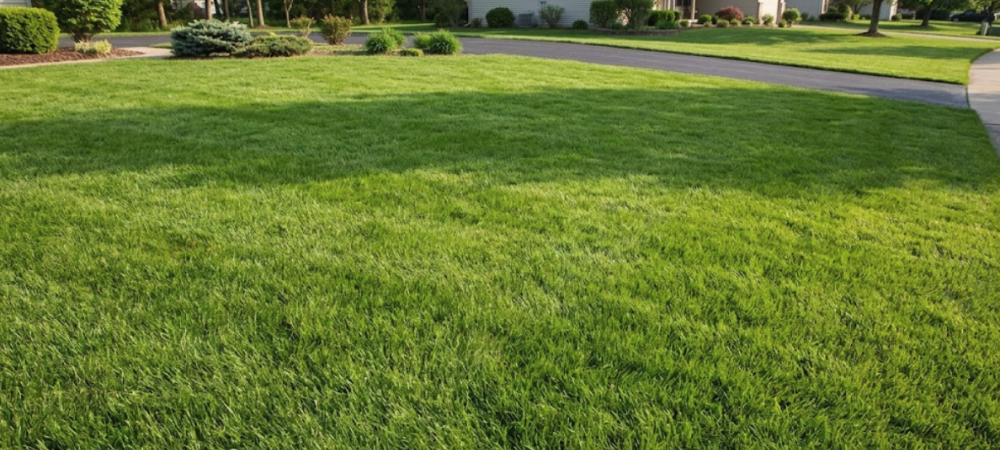
Turf-type tall fescue is the most widely used option and the best all around fit for most Knoxville lawns. Zoysiagrass is the strongest warm-season choice for the area. Bermudagrass performs well in full sun but stays brown for a long stretch of the year. Centipedegrass is generally not recommended here.
That ranking comes with a caveat, and it is the whole story of growing grass in East Tennessee: no species is a clean win. This climate supports both warm-season and cool-season grasses, and neither type thrives year round without some seasonal stress.
Why Is Knoxville a Difficult Place to Grow Grass?
Because it sits in the transition zone, the band across the middle of the country where the climate is a poor match for both grass families. Cool-season grasses grow best around 60 to 75 degrees. Warm-season grasses want 80 to 95. A Knoxville summer runs hot and humid enough to stress the first group, and winter brings enough cold to shut down and occasionally injure the second. Knoxville averages roughly 68 nights a year at or below freezing.
So the real question is not which grass is best in the abstract. It is which set of seasonal trade-offs you would rather manage.
Tall Fescue
Turf-type tall fescue suits most home lawns in East and Middle Tennessee. What it gives you is the longest green season of any option here. Fescue holds color through spring and fall and often stays green through much of a Knoxville winter, and it handles partial shade better than the warm-season grasses.
What it asks in return is summer support. Fescue is the most disease-prone option in East Tennessee humidity, particularly to brown patch, and it thins under heat and drought stress. It is also a bunch-type grass, meaning it spreads only by producing new shoots from the base rather than by runners. A fescue lawn does not fill in its own bare spots. Periodic interseeding is what maintains density, which is why fall seeding is a standard part of a fescue program rather than a one time job.
One note on variety, since it comes up often. Kentucky 31 is the older fescue that many area lawns and pastures were planted with. Newer turf-type tall fescues were bred for finer texture, darker color, and better disease resistance, which makes them the better choice for high-value, high-visibility areas like a front lawn.
Zoysiagrass
Zoysia has been gaining ground in the Knoxville area, and it makes sense. It forms a dense, fine to medium textured turf, it spreads by both above ground and below ground runners so it recovers from damage on its own, it has good drought tolerance, and it holds up in moderate shade better than bermudagrass does.
The trade-offs are real. Zoysia establishes slowly, which is why it is planted from sod, plugs, or sprigs rather than seed in most cases. That density comes with thatch, so periodic dethatching becomes part of the maintenance calendar. And it goes dormant and turns brown once soil temperatures drop below roughly 50 to 55 degrees, which in this area means a brown lawn from around late fall until spring green-up.
Bermudagrass
Bermudagrass is the toughest option here for full sun and heavy traffic. It has excellent heat and drought tolerance and recovers from wear faster than anything else on this list.
It has two hard limits. Shade tolerance is poor, so any part of the yard with tree cover or a building shadow will thin out. And it carries winter injury risk in colder areas, which matters more in the higher elevation and colder pockets around Knox County than in the city itself. Combined with a long winter dormancy, bermuda tends to make the most sense on open, sunny, heavily used lawns.
What About Centipedegrass?
It is not widely recommended in Tennessee, and winter is the reason. Centipedegrass has very limited cold tolerance, so winter injury and stand loss are likely in this climate, and it recovers from damage slowly. Sod is also hard to source locally. It shows up occasionally in area lawns, but it is not a species most Knoxville properties should be counting on.
Many Knoxville Lawns Have More Than One Grass
This is common and easy to miss. Different grasses often occupy different parts of the same property, with cool-season grass holding on in shaded areas and warm-season grass thriving in full sun.
That matters because the two types need opposite care calendars. Fescue wants its heaviest fertilizer in fall. Bermuda and zoysia want theirs in summer. Fescue mows tall, in the range of 2.5 to 5 inches, while zoysia and bermuda mow low, closer to 1 to 2.5 inches. A single mowing height and a single fertilizer schedule across a mixed lawn will always be wrong for part of the yard.
Not sure what type of grass to get or what you already have? Not sure whether your current care schedule matches it? Ask Grover Turf Care and we can walk through it with you.